Work and measurement
Audit, implementation and monitoring have distinct scopes.
Website Speed Optimisation
Understand what slows your website down and prioritise the improvements that matter to your visitors.
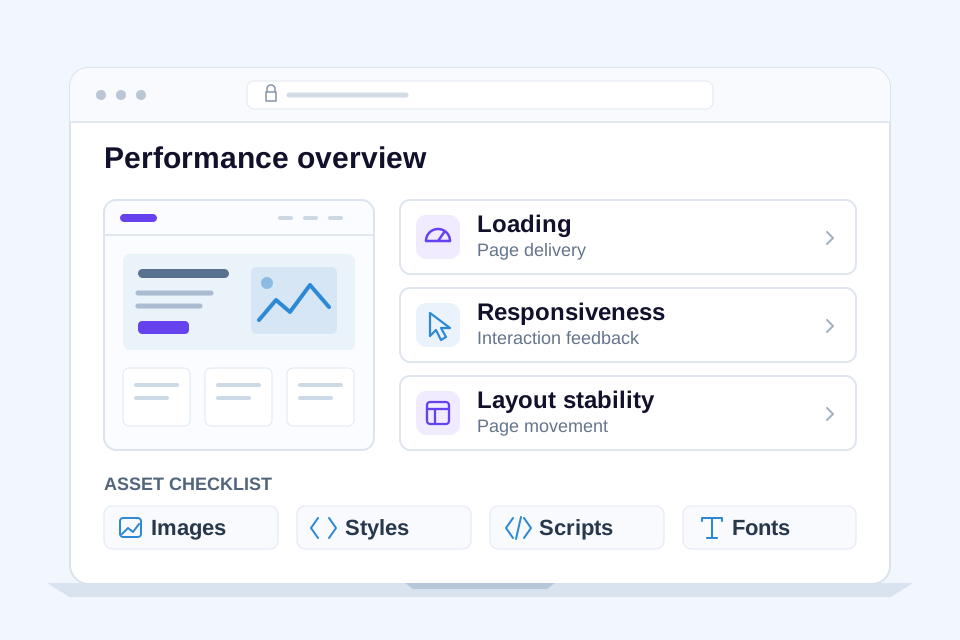
Largest Contentful Paint (LCP) concerns when the main content becomes visible. Interaction to Next Paint (INP) reflects responsiveness to user interaction. Cumulative Layout Shift (CLS) concerns unexpected movement. These differ from an overall Lighthouse score. Field data reflects real users where available; laboratory tests help diagnose issues.
main-content loading
interaction responsiveness
unexpected layout movement
Review representative pages and templates, important images, fonts, CSS, JavaScript, third-party scripts, image delivery and caching. Hosting response is examined where access allows. A store review includes product and collection pages. Findings identify impact, effort, risk, platform limits and work requiring a host or app provider.
Potential changes include suitable image sizing, modern formats, caching, font delivery and inefficient theme or plugin assets. A plugin is not removed by default when it performs an essential function. Host or PHP changes need compatibility checks and rollback. A substantial rebuild has a different scope from performance-only work.
Storefront images, theme assets, scripts and app behaviour can be investigated. Hosted platform infrastructure is not fully under developer control. Inventory bundles, reviews, subscriptions and other required functions before changes. Use an appropriate preview and test buying journeys. A design compromise requires merchant approval.

Measure a baseline, agree priorities and implement suitable changes in staging or preview. Check affected templates and required functions, then obtain approval before release. Prepare rollback and keep a change record. Access, third-party limitations and approved design changes influence the result.
Before-and-after evidence needs comparable URLs, device settings and test conditions, with dates and repeat observations where variation matters. Label lab measurements separately from field evidence. Real-user data may take time to reflect changes or be unavailable on low-traffic pages.
| Evidence field | Record |
|---|---|
| URL and template | The same relevant journey |
| Date and device | Comparable context |
| Method | Lab diagnostics or real-user field data |
| Changes | Assets and dependencies affected |
| Function checks | Forms, menus and checkout where applicable |
An audit-only engagement differs from implementation and monitoring. Templates, scripts, hosting constraints and implementation depth affect the quote. Performance supports usability within a wider SEO strategy; maintenance can help review later regressions.
Audit, implementation and monitoring have distinct scopes.
Comparable before/after records and a plan for later regressions.
Share the URL, platform, important page types, existing reports and features that must remain. Account access is arranged securely after scope agreement. The assessment is not represented as a free comprehensive audit.
No. Results depend on the platform, dependencies and agreed changes. The engagement focuses on measured improvements and working functions, rather than a perfect score promise.
Network, device conditions, changing content and third-party scripts can vary between laboratory runs. Comparable conditions and repeated observations make the evidence more useful.
Essential functions are inventoried and checked after changes. Design compromises need approval; blanket app or plugin deletion is not the default method.
Both can be assessed within confirmed access and capability. WordPress hosting and software choices differ from Shopify’s hosted-platform boundaries.
No. Performance supports user experience, while search visibility depends on useful content, relevance, indexing and many other factors.
The report can use clearly labelled laboratory diagnostics. It will not invent field results or treat a lab score as real-user Core Web Vitals evidence.